Wood as a Structural Choice
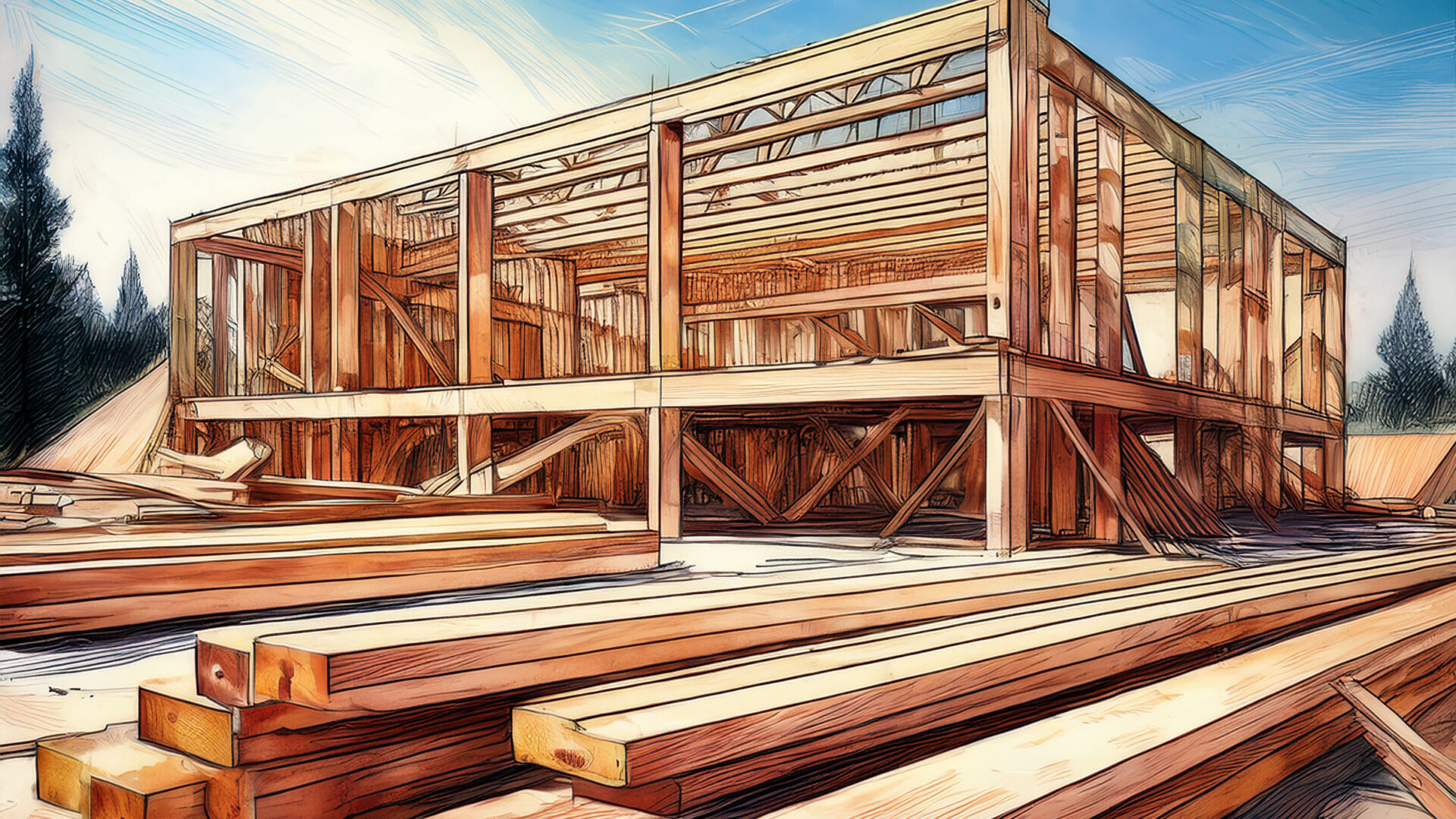
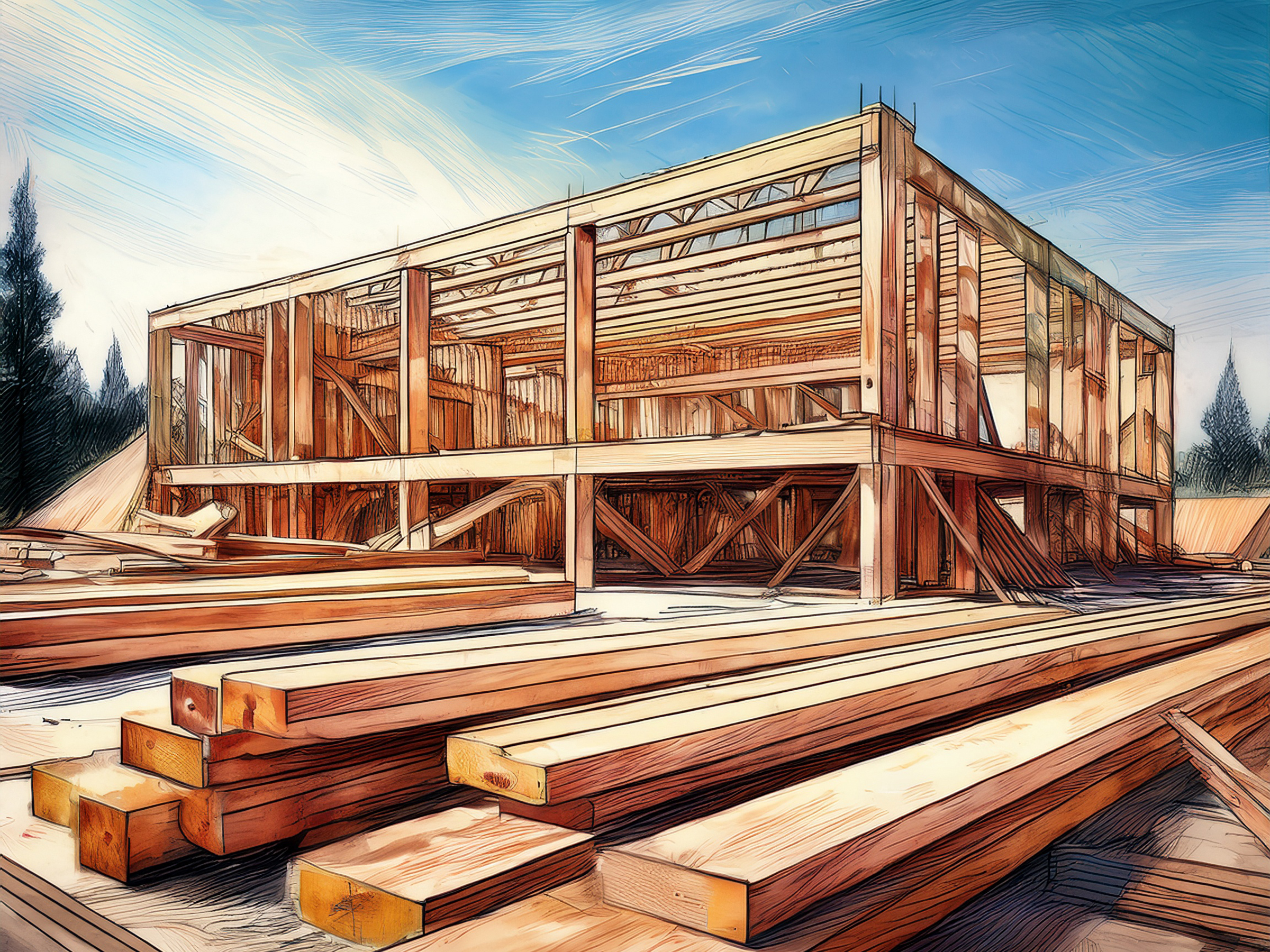
Wood is the most prevalent building material in residential and light commercial construction. Despite being utilized in the vast majority of construction, forested acreage is actually generally increasing. It’s lightweight, easy to work, and ubiquitous. You never have to ask a contractor if they’re familiar with “wood.” Most general contractors worked as a rough or trim carpenter for at least a portion of their career. It’s also a surprising actlve source of innovation and if you’re looking for a product to fill a need, you can usually find someone using some form of wood to do so. From the structural members to the decorative paneling to the insulation, to the flooring, interior and exterior. So, we’re going to take some time here to discuss the pro’s, con’s, and some of the innovations in wood.
Why is Wood Ubiquitous?
Mostly because it is traditional, flexible, and plentiful. When settlers came to this country, it was in many ways, nothing but forests. Early settlements utilized those forests to build the homes, heat them, and build ships to expand, explore, and trade. As such, every town had several skilled craftsmen in carpentry or ship building (or often both) experienced in working with wood. This meant that it was the material people generally turned to despite the downsides. Those include the difficulty in crafting stable joints, susceptibility to fire, rot, and pests, and the high maintenance requirements. For larger and more durable buildings, people did turn to brick and stone and eventually concrete and steel, but wood has always been the backbone of smaller scale building.
Wood is cheap to source and easy to mill with metal tools. It’s also been adaptable. Early American structures were general post and beam/heavy timber with cladding or infill walls. But as old growth forests were depleted, construction adapted packaging technologies to utilize faster growing and more plentiful soft woods and plentiful planks. When the army needed a way to build quick barricades to stop tanks in World War II, they created plywood. These basic technologies are the basic building blocks of most small scale structures erected today. In fact, manufactured wood products have increased efficiency, decreased the required skills of laborers, and allowed for stronger and longer lasting materials. Various chemical and physical processes have been developed to increase wood’s resistance to decay and fire expanding it’s use options and decreasing it’s maintenance requirements.
The Old Stand-By’s and Innovation
Your great grandfather’s 2×4 is still around, Dimensional lumber is cheap and flexible and still very useful. These are often used for studs and joists in residential and light commercial construction.
When treated with preservatives, it is the most common exterior structural material for residential construction as it is solid and rugged. There different levels of treatment available depending on use factor (standard, ground contact, marine is the typical spread). In each case though, the wood is impregnated under pressure by a preservative, usually following the AWPA‘s standards. Older standards included arsenic which caused some concern, but most standards now have removed the arsenic and rely on micronized copper instead which turns the wood a shade of green.
There are other impregnation options though. Some of them are intended to inhibit fire. Some treatments are intended to increase stability of the wood or increase moisture and mold resistance. Innovations in forestry have also brought new species to market with various properties that affect aesthetics of durability. Sometimes these species and treatments require a little experience or more durable tools, so it’s actually important when using less standard options to have an experienced carpenter involved (or a larger budget for waste/learning.) You also need to do your research on fasteners because not every type of wood plays well with standard fastener materials.
Manufactured Options
Trusses have been around for ages, but they’re finding more and more uses in construction. A truss is pretty much a pre-manufactured component utilizing standard 2x members. They have advantages in speed of assembly and ability to span and enclose space quickly. However, you cannot alter them in the field. We get a lot of calls from people who find a damaged or cut truss who need professional assistance to repair them. You lose some flexibility in construction, but you gain a ton of flexibility in design options as they can be used for joists, rafters, or even replacing entire beams and assemblies. When using trusses, early planning and a sharp eye on the shop drawings is critical, as is precision of the supporting structure since making changes in the field is extremely difficult.
Then there are engineered wood products. These include I-joists, Laminated Veneer Lumber (LVL), Laminated Strand Lumber (LSL), Parallam Strand Lumber (PSL) and other options. What these products all have in common is that they take raw lumber, break it into veneers or strands, and glue them back together with resin. They come in interior and exterior grade (depending on the resin usually) options and allow for a lot more strength. The major reason for this is that when you use a less processed dimensional lumber, you cannot control for natural variations. As such, the allowable stress levels need large factors of safety to account for unfortunate knots and checks that can undermine the integrity of the entire board. Engineered systems can be much more sure about the strength of the members at any point as the process tends to remove structural variation of the materials or at least decrease the chances of them occurring concurrently in several layers at the same location. They’re also much more dimensionally stable which can be very imporant, especially in additions to older structures. These are very common, easy to source, and most contractors should be familiar with their use as they show up in just about every project we do in at least one or two places.
Mass Timber Wood Products
Glue Laminated Lumber (Glu-lams) is a relatively new area of innovation. The oldest version of this is the glu-lam beam or post where several 2x’s are finger jointed and glued together in a stack to create a giant beam from smaller members. The best boards can be placed at the edges of the beam where stresses are greatest. This allows for very large solid wood beams and posts that are straighter and much easier to harvest than finding a tree to give you a giant solid 40′ long member. We use them almost exclusively for pole building posts because they provide a straight and strong vertical support member. They can also be treated just on the boards in contact with or near the ground which saves money. We also will use them for exterior grade girders for houses on piles.
More recently, this idea has been expanded into Cross Laminated Timber (CLT) panels. These are dimensional lumber sheets with boards laminated in each direction giving you a very thick and solid member. This is popular with heavy timber construction as it can span between large girders to provide a solid floor. These glu-lams and CLT panels also have great fire resistance even without treatments. It’s not that they won’t burn, it’s that they are so think that they char which protects the wood and gives people time to escape before the fire spreads or collapses the structure. We haven’t had the chance to utilize this sort of structure yet, but it’s something we would love to bring to our area for a client who wanted large open spans but wanted to stick with easier to work with and prettier to expose wood over steel/concrete options.
In more rural areas, wood is the most common structural choice, but that doesn’t have to limit your design options. The ease of working with wood makes it an easy option and most buildings under 10,000 square feet have no code limitations that limit the use of combustible materials. It’s still important to detail wood properly to prevent rot and infestations. But when used correctly and kept dry and protected and properly maintained, it’s a solid material that you can expect to last for a century without too much trouble.
