What are Record Drawings?
As part of a series to help our clients understand our services, we’re doing a deep dive on Record Drawings. We often get a ton of questions about what a service is, what is included, why are we doing it, what can they expect to get, etc. This is the first in our series is going to break down our services and try to explain for clients who want more information than they’ll get in the proposals we send out. We’re going to arrange this series in chronological order and try to link them together so you can step through these posts to answer your questions. The next in this series is about Schematic Designs.
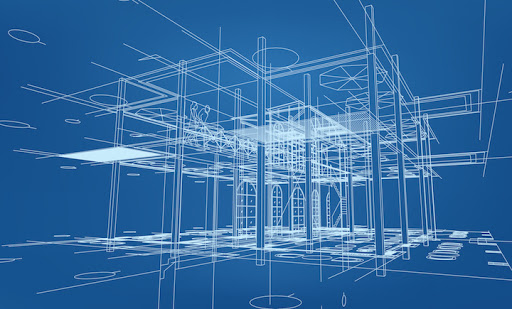
Record drawings are pretty simple in the basic form. They are a record of the existing conditions of the building. For any client that is doing a renovation, addition, fit out, or other project that utilizes existing conditions, it is the first step. For these drawings, we will send one or two members of the Archology Staff to a site to measure the plan, elevations, structural members, and any other details we need. This allows us to develop base plans for further work.
Most of the time, these drawings are intended as base plans and are not provided on their own to the client. There are exceptions to this rule. Sometimes it’s helpful to include the current conditions in with the schematic designs. That can help illustrate the proposed changes or major obstacles. In some cases, the record drawings are the final submittals. This is most common when a building is simply undergoing a change of use and the existing conditions just need to be documented for various reasons.
Why Do We Insist on a Site Visit to Generate Record Drawings?
The are called record drawings because they are intended to be a record of existing conditions. We almost always insist on a site visit and measure, at least of key details. Why is that? Because things change. We are often presented with construction drawings or drawings done by someone else to try to save time. Although we appreciate additional data and will use them, we still want to do measurements for ourselves. One reason for that is it’s the only way we can assume liability. Surely you’ve heard of garbage in/garbage out? If we’re starting with drawings that aren’t accurate, we can’t guarantee the accuracy of our products either.
In addition, even if the drawings are perfect and the building was built perfectly to the original specifications. Things change. We had a job where someone added two feet to the width of a building, which threw off the dimensions and suddenly, the kitchen cabinets didn’t line up and the walk-in pantry became a reach in. We’ve had unpermitted additions, repairs, and other modifications to buildings. Buildings are often changing in response to their environment. It’s also a chance for us to inspect what can be seen for future potential conflicts or needed repairs. We’ll never catch everything until the finishes start getting removed, but we can catch a lot to help inform our future design work.
Work Product Examples
As we’ve said, these drawings are generally meant to be utilized in house and aren’t necessarily provided to the client. However, below are some examples of a residential record drawing we did. We’ve scrubbed a lot of the detail, and any identifying notes. Generally, there will be notes about structure and plate heights, and other key factors on these plans in addition to the base plans. But this gives you an idea of what we may be providing, at least in house for the next steps.
Work product Examples


