
Our Services Explained: Engineering
As part of our ongoing effort to provide resources to our clients trying to do due diligence, or understand what it is we can and cannot do, we’re going to discuss engineering. Our previous post was on construction drawings. Engineering is something that we generally do not do ourselves. And a great way to explain this, is probably to explain the difference between an architect and an engineer.
When I was growing up, my father (an engineer) thought an architect was “an engineer with lace.” This is mostly because he didn’t know any architects. Most people don’t. We’re well respected, but no one’s really sure why. The truth is that it’s a completely different job. Engineers design systems, architect’s coordinate buildings.
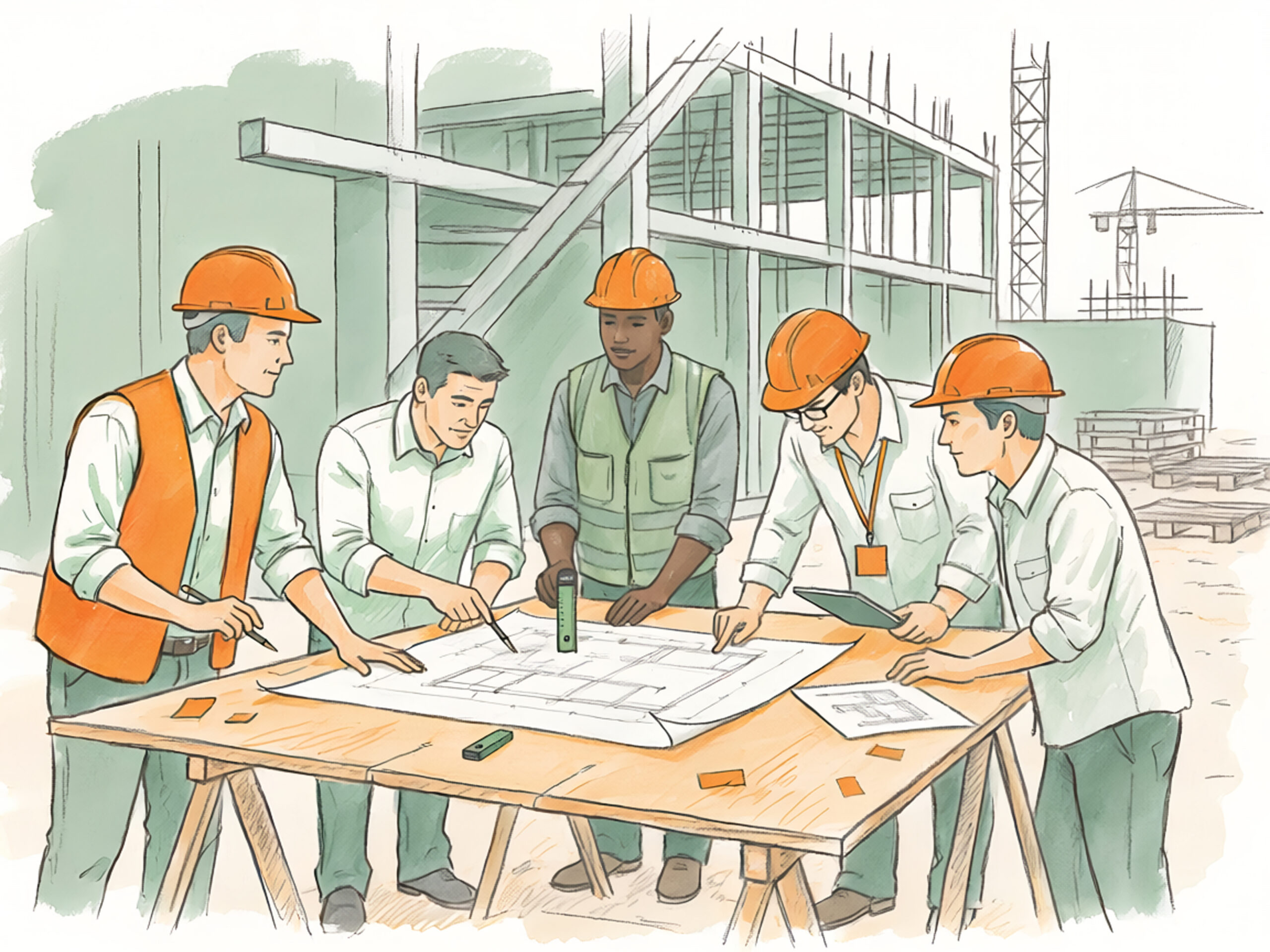
Architects tend to be knowledgeable about many fields, but a broad knowledge. Engineers are the specific experts in their portion. Engineering has grown as a field by leaps in bounds. 200 years ago, contracts to build a home were 2 sentences and there were no building codes to comply with. Today, buildings are complex intersections of many specialties including complex structural systems, heating and cooling, electrical, plumbing, storm water management, traffic flow on the site, sprinkler and alarm systems, and on and on and on. One engineer is responsible for each of those systems. Architects are responsible for the coordination of those systems, making sure the building has space for them, and that they will interact in a positive way in case of emergency (e.g. a fire won’t block all of the exits while also collapsing the floor.) Architects are also charged with making sure buildings are accessible to everyone and reflect the community standards and expectations (that’s a fuzzy expectation, but often critical.)
Engineering Services
So, if we aren’t engineers, how do we provide engineering services. The short answer is, we don’t, directly. Unless this post is horribly out of date, we do not have any engineers on the payroll. However, we have relationships with many local engineers and bring them on as needed. Often we either refer clients to engineers for the client to hire directly (usually Civil Engineering or Landscape Architects for site design) or we bring them on as a consultant and incorporate their fees into our own (usually Structural or Mechanical engineers.)
That all being said, we do have some unique advantages. Our founder minored in structural design in college and handles most of the small scale (residential) structural work in house rather than hiring out to engineers. We do still hire Structural Engineers for complicated or unusual jobs, or if required by state law (like for piling foundations in Delaware.) We do not do any civil work partly because we’re not really qualified and partly because even if we did, the agencies wouldn’t accept our submittals. We’re also not especially qualified for Mechanical Engineers, but have partnered up with tradespeople to spec and generate submittals for agencies on very simple jobs.
Many architects want to only focus on the building, but we pride ourselves in going a little further. This is great for smaller commercial work as some of this engineering can triple the cost of the design with very little value to the owner. It’s also great for our residential clients as we’ve worked with other firms where their costs for engineering are the same as our overall fee for the entire job. The key to this is we have to know our limits. We’ll save you money where we have the skills to do so, and if we don’t have the skills to directly do the work, our extra expertise generated from taking on a greater role in the systems allows us to advocate for better systems for you. That can lead to construction cost savings, operational cost savings, or just a better set of systems.
Our proposals will generally spell out any engineering services we feel your project will need. It will also exclude any services not directly mentioned. Things can change during the design and even permitting process. In that case, we will assist you by finding the correct expert. We can approach them for a price and pass it along or refer you directly. We’ll do our best to keep you informed. We do not want you to get a surprise bill, even if the need for this bill was a surprise to us.
